 English
 中文简体
 русский
Single hook type C snap Carp fishing snap N9100
Cat:Fishing Snap
Number: N9100 Product Name: Single hook type C snap Material: Stainless steel Color: Matt black Specification Pull KG Wire diameter * length ON...
See Details
EN
0086 574 6251 0888
0086 574 6251 0888
Content
On a calm morning, when bass are holding tight to weed edges, a propeller lure throws water with a churn that is hard to ignore. The blades chop the surface, leave a trail of bubbles, and often trigger a strike from fish that refuse other baits. In my experience, however, the lure is only half of the setup. The ring, snap, and swivel that connect it to the line decide whether the prop actually spins, whether hooks stay sharp, and whether you land the fish. That is the part most anglers overlook, and it is exactly where a well-built terminal tackle system changes the outcome.
Propeller lures work because they trigger a predatory response through sound and visual disturbance. The spinning blades create a buzz, a splash, and a visible wake that mimics a wounded baitfish struggling at the surface. Predatory fish such as bass, pike, and inshore species are wired to investigate that kind of signal. In practice, the lure is most effective when fish are actively feeding in the upper water column, or when low light and moderate chop reduce their ability to follow a presentation.
This does not mean the propeller lure is a universal bait. It is a targeted tool for specific conditions. You still need the right rod, reel, line, and terminal tackle to make the bait behave as intended. In particular, the connection between the lure and your line controls how freely the propeller rotates, which affects how much sound and vibration the bait produces.
Different propeller arrangements change the rhythm and splash of the bait, so each type has a clear purpose. Choosing one over the other should be based on the depth of the strike zone, the amount of surface chop, and the activity level of the fish.
| Lure Type | Propeller Arrangement | Key Action | Best Use |
|---|---|---|---|
| Single prop | One blade at the tail | Sharp, focused splash | Calm, clear water where a subtle presentation matters |
| Double prop | Two blades at the tail | Richer churn and wider wake | Slightly choppy water or when fish are feeding on baitfish |
| Twin prop | Two blades on front and rear | Loud, disruptive surface action | Low-light conditions and aggressive fish |
| Soft-body prop | Propeller built into a soft plastic body | Softer sound and slower sink | Overlook presentation or when fish are less aggressive |
The table above is a starting point. In practice, you can tune the bait by changing the size of the propeller, the material of the body, and the type of split ring used to hold the hooks and blades.
If the terminal tackle restricts rotation, the prop becomes a dead weight. The most common problem is a direct knot tied to the line. A direct knot can bind the front brass or plastic portion of the bait, while the rear propeller continues to turn. This pulls the bait off balance and reduces the number of real strikes you get.
The first step is to use the correct fishing lure rings on the hook hangers and propeller mounts. A split ring with the right wire diameter and opening strength lets the bait move freely without allowing hooks to work loose. For small baits, a ring made from 0.8 mm wire can work well; for larger baits that serve up spinners and treble hooks, 1.2 mm or heavier is more appropriate.
 Stainless Steel Split Rings for Secure Lure AttachmentsThese durable stainless steel split rings keep hooks and props securely attached while allowing free movement. Available in multiple sizes to match your bait and prevent hook loss during casts.View Product →
The second step is to add a swivel between the main line and the bait. Propeller rotation creates constant torque, which can quickly twist a monofilament or fluorocarbon line. A quality rolling swivel releases that torque before it creates knots. When you use a snap instead of a knot, you avoid the binding problem altogether and gain the ability to change baits in seconds.
Retrieve speed is the most powerful variable you control when fishing a propeller lure. There is no single correct speed, because water temperature, light level, and fish mood all shift the answer. Still, a few patterns cover most situations.
A steady slow retrieve is the starting point. It creates a continuous churn and keeps the bait in the strike zone longer. This works well in spring and fall, when fish are in cooler water and are less willing to chase a fast-moving bait. When fish are aggressive, the pump-and-pause retrieve becomes more effective. The bait throws water on each pull, then sits motionless during the pause. In my experience, the pause is where the hardest strikes happen.
Using a quick-change snap on the front of the lure means you can switch from a larger prop to a smaller one without retying. This matters when the retrieve speed changes but the bait size needs to stay natural. If you want to adjust quickly without cutting line, a coastlock snap gives you a secure connection that holds up under repeated casts.
 Coastlock Snap for Quick Lure Changes and Strong ConnectionsThis stainless steel coastlock snap offers double insurance against accidental opening and provides a secure link for quick lure swaps. Its elasticity resists corrosion and avoids line damage.View Product →
Color is another factor that affects the outcome. In clear water, natural silver, white, or translucent finishes often outsell dark baits because they look like baitfish. In murky water, dark colors such as black or blue can appear as a stronger silhouette and produce better reaction strikes. In low light, a bright color or a lure with a metallic finish can give the fish a target to track.
A medium-heavy casting rod with a fast taper is the most useful choice for propeller lures. The length should be in the 6.5 to 7.5 foot range, depending on whether you are fishing shorelines with short casts or boat edges with long accuracy demands. The fast taper helps set the hook through a wide surface drag, which the bait creates when it turns against water pressure. The medium-heavy power gives the rod enough backbone to move a bass away from grass.
For the reel, a high-speed model with a gear ratio around 7.1:1 is ideal because it lets you pick up line fast after a strike and compensate for the slack that comes from a pause retrieve. Braided line is a good choice below 10.0 kg, tied to a fluorocarbon leader of 6 to 10 kg. Braid provides low stretch and high sensitivity, while the fluorocarbon leader remains invisible to wary fish.
Most propeller lure failures are component failures. A few common errors come up again and again among anglers who fish these baits.
Buying terminal tackle in bulk from a manufacturer that controls tolerances and material quality has a direct effect on how well these lures perform. This is especially important for fishing brands that build their own prop lures and need a supply chain that delivers consistent parts, not just the cheapest available components.
For brands and distributors, terminal tackle compatibility is a buying decision, not a detail. The materials, load ratings, and manufacturing consistency of the connectors directly determine how the lure behaves in the field. When you build a prop bait program, every split ring, snap, and swivel should be matched to the size and action of the lure. A lure that is designed to stay in the strike zone will not perform if the connector limits its movement.
In a B2B context, the relevant evaluation criteria include batch-to-batch consistency, delivery reliability, and the ability to customize dimensions or finishes. A supplier with decades of custom terminal tackle experience can typically produce components that match different prop bait weights, hook sizes, and lure colors. This matters for companies that sell across multiple markets with different fishing styles and water conditions.
One of the most versatile components for prop lure rigging is a rolling swivel combined with a coastlock snap. It gives you a direct connection between main line, float, or leader, and the lure, while still allowing quick lure changes. It also reduces line twist caused by the spinning blades, which is a major reason many anglers lose confidence in these baits.
 Rolling Swivel with Coastlock Snap for Twist ReductionCombining a rolling swivel with a coastlock snap, this brass and stainless steel component reduces line twist from spinning blades and enables fast lure changes without retying.View Product →
The cost difference between a poorly made connector and a properly hardened stainless steel component is small relative to the value of the fish you might lose. For anyone sourcing these parts in volume, the risk is not the price per unit; it is the return rate and the quality complaints that come from a batch of weak clips or oversized rings.
Propeller lures will not produce every time, but when the conditions are right, they are among the most exciting ways to target predatory fish. The decision to pay attention to rings, snaps, and swivels is not about being overly technical. It is about making sure the bait can do what it was designed to do. For any angler or team building a custom prop bait program, the terminal tackle should be viewed as part of the lure, not as an afterthought.

Number: N9100 Product Name: Single hook type C snap Material: Stainless steel Color: Matt black Specification Pull KG Wire diameter * length ON...
See Details
No.: N9301 Product Name: Pointed Insurance snap Material: Stainless steel Color: Black nickel, stainless steel Specification Pull 2#0.8*6mm 35k...
See Details
No.: YM-2030 Product Name: Open eye snap Material: Stainless steel Color: Stainless steel color Specification Pull KG 1.8*60mm 50 2.0*80mm 10...
See Details
Number: YM-2006 Product Name: Insurance snap Material: Stainless steel Color: Black nickel, stainless steel Specification Pull KG 000# 4 00# ...
See Details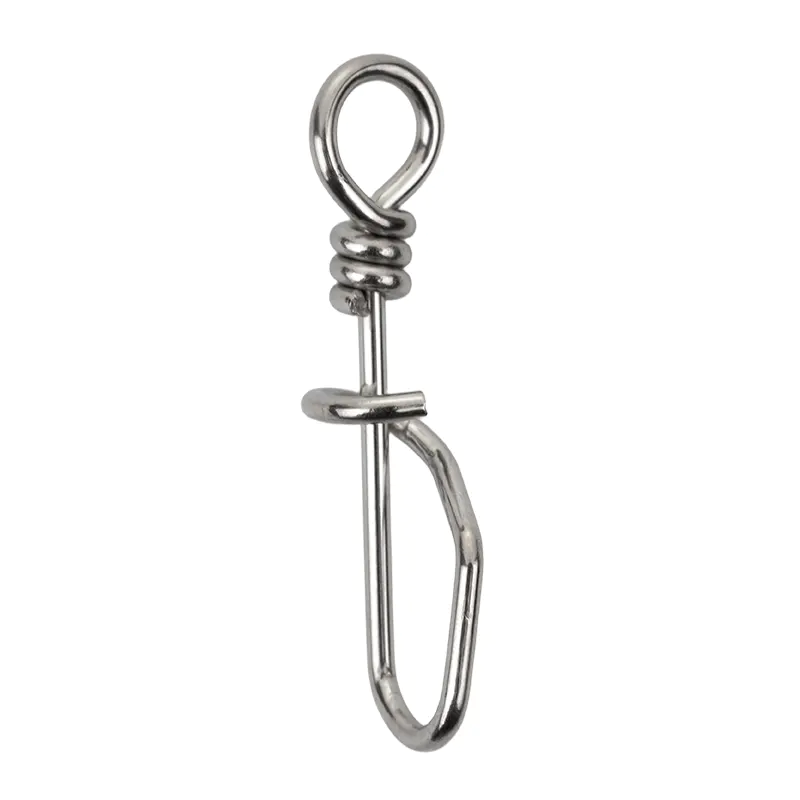
Number: N9133 Product Name: Round T-Shape snap Material: Stainless steel Color: Black nickel, stainless steel Specification Pull Wire diameter ...
See Details
Number: YM-2004 Product Name: Nice snap Material: Stainless steel Color: Black nickel, stainless steel Specification Pull KG 000# 4 00# 9 0...
See Details
Number: N9107 Product Name: Diamond snap Material: Stainless steel Color: Natural color Specification Pull KG Wire diameter * length ONLY 20KG ...
See Details
No.: YM-3034 Product Name: High speed double rolling swivels with coastlock snap Material: Brass + stainless steel Color: Black nickel, white nickel, ...
See DetailsIntroduction to Stainless Steel Fishing Swivels When it comes to fishing gear, one small but vital component that often goes unnoticed is the fishing swivel. T...
READ MOREUnderstanding the Importance of Regular Fishing Line Spooler Maintenance 1. Preventing Line Tangles and Snarls One of the most frustrating experiences an angler...
READ MOREAre Fishing Swivels the Unsung Heroes of Your Tackle Box? What are Fishing Swivels, and what is their crucial role in tackle setup? Fishing Swivels, often simpl...
READ MOREOur company processes and produces various fishing tackle accessories for many well-known foreign fishing gear brands.
Copyright © Ningbo Yongmiao Fishing Tackle Co., Ltd. All Rights Reserved.


Contact Us